Report on Copernicus Hubs and Institutions Excursion
June 20, 2025
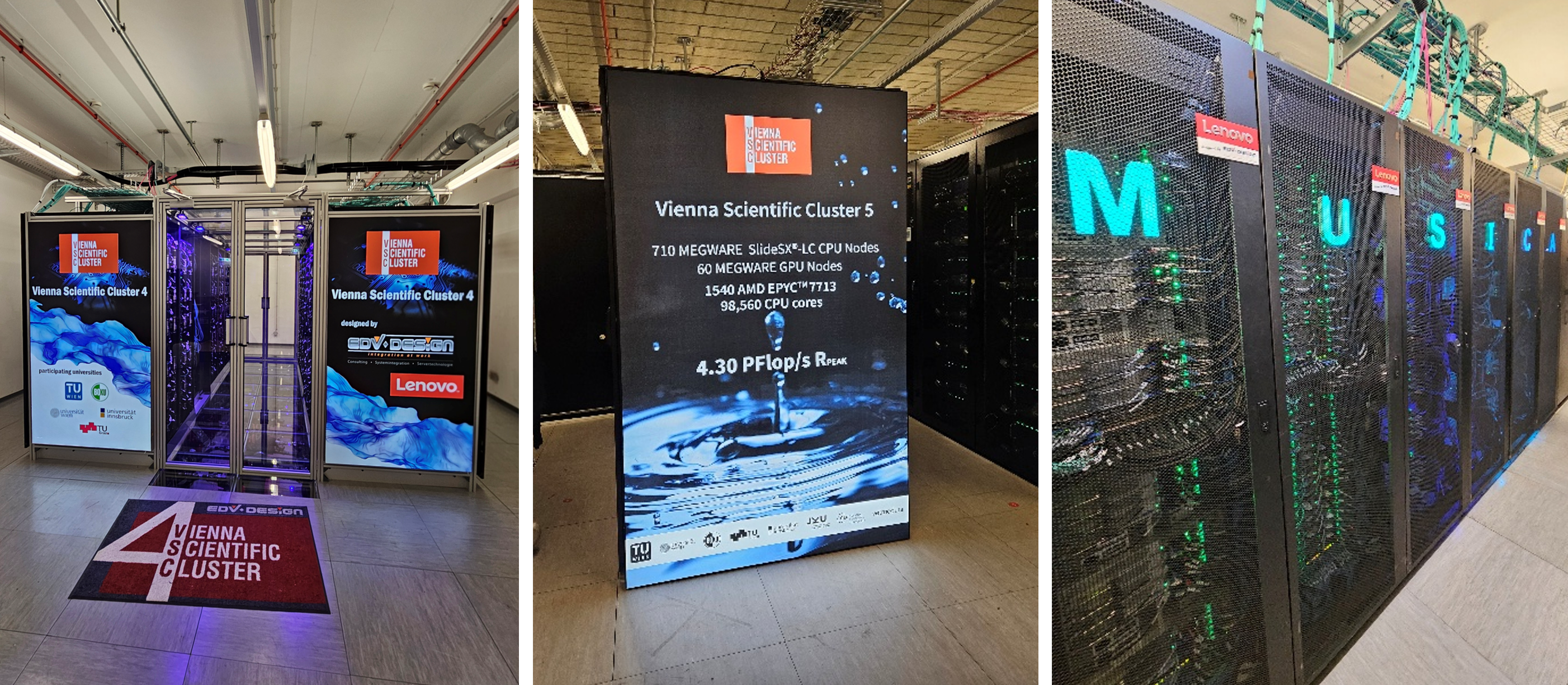
At the start of June, I had the insightful opportunity to participate in an excursion as part of the ‘Copernicus Hubs and Institutions Course’ in Vienna, Austria. This trip offered a comprehensive overview of how key Austrian institutions contribute to the broader European Earth Observation landscape.
Learning more about the EODC, BEV and UBA
Our day began with a morning session at the Earth Observation Data Centre (EODC) at TU Wien. It was fascinating to learn about EODC’s role as a public-private partnership, providing petabyte-scale satellite data storage and high-performance cloud computing. I gained a much better understanding of how they manage “Big Data” and act as a collaborative hub for satellite data processing, crucial for various environmental applications. We even toured the impressive Vienna Scientific Cluster (VSC) and MultiSite Computer Austria (MUSICA) supercomputer facilities, as shown in the image above.
The afternoon session took us to the Umweltbundesamt (UBA) offices, where we heard from representatives of the Bundesamtes für Eich- und Vermessungswesen (BEV) and UBA itself. I learned how BEV manages Austria’s mapping and remote sensing, while UBA, the national environmental agency, specialises in monitoring air, water, and soil, actively contributing to land cover datasets and international environmental projects. Their work in developing SpatioTemporal Asset Catalogs (STAC) and participating in the GreenData4All initiative truly highlighted their innovative approach.
The excursion provided invaluable insight into the rationale and infrastructure behind both these companies, and it was an eye-opening experience to witness firsthand how these European space initiatives complement each other on a national level.